Non-Surgical Spinal Decompression
Our Back On Track decompression table applies a gentle, controlled stretch that eases pressure on spinal discs—commonly used for herniations, bulges, and sciatica.
Learn More +Delray Beach, Florida
Non-surgical solutions for chronic back pain, disc injuries, and joint dysfunction.
Request received — we'll contact you within one business day.
Not just the symptoms.
Proven. Precise. Effective.
Built around you.
Live without limits.
Why Strata
We identify the true source of pain—not just where it hurts.
Advanced diagnostics, spinal decompression, and shockwave therapy under one roof.
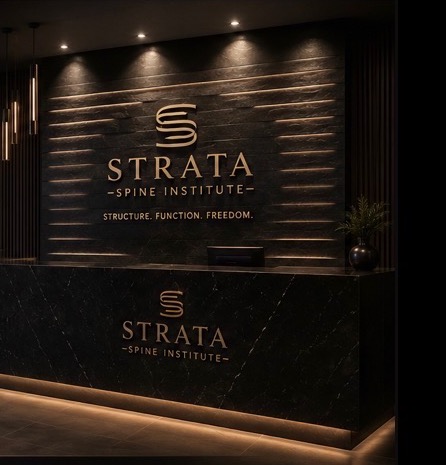
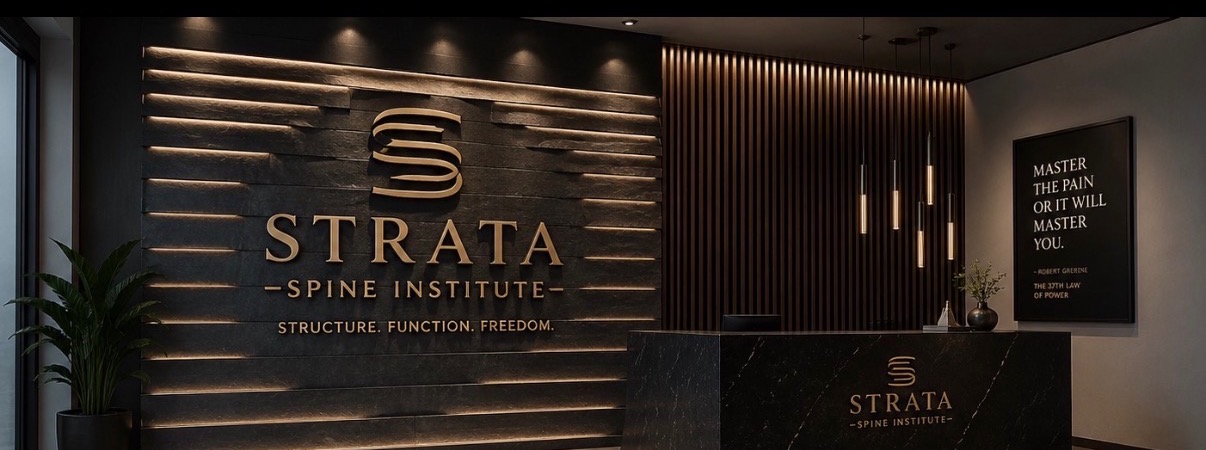
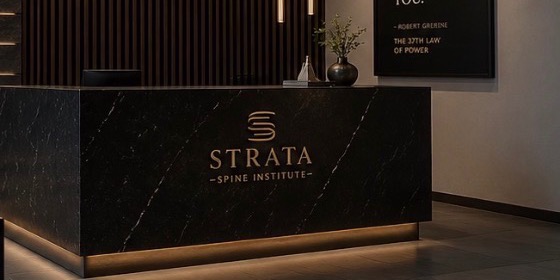
A premium clinical environment designed around outcomes—not volume.
Every detail inside Strata was intentionally designed to inspire confidence before treatment even begins.
Master the pain, or it will master you.
— Robert Greene, The 37th Law of Power
Specialized Treatments Under One Roof
Conditions We Commonly Treat
Non-Surgical, Cause-First Care
What We Do
Our Back On Track decompression table applies a gentle, controlled stretch that eases pressure on spinal discs—commonly used for herniations, bulges, and sciatica.
Learn More +Focused acoustic energy stimulates the body's natural repair response in stubborn tendons and soft tissue, from plantar fasciitis to tennis elbow.
Learn More +Specific, controlled adjustments restore motion to restricted joints and help rebalance the way your spine moves.
Learn More +On-site digital imaging gives us a clear, detailed view of your spine so your plan is built on evidence, not guesswork.
Learn More +Progressive, guided exercise rebuilds the strength and stability that keep your results holding long-term.
Learn More +Fine-tuned care that helps active bodies move better, recover faster, and stay ahead of injury.
Learn More +Conditions
From spinal discs to stubborn tendons, we address a wide range of musculoskeletal conditions. Select any to learn more.
A herniated disc occurs when the soft inner material of a spinal disc pushes through its outer wall and may irritate nearby nerves, sometimes radiating pain into the arms or legs. Non-surgical spinal decompression is commonly used to gently reduce pressure on the affected disc, while precision chiropractic adjustments help restore balanced movement to the surrounding segments.
A bulging disc extends beyond its normal boundary without fully rupturing, sometimes crowding nearby spinal nerves. Spinal decompression may help create space and relieve that pressure, and corrective rehabilitation supports the muscles that stabilize the area over the long term.
Sciatica is pain that travels along the sciatic nerve from the lower back through the hip and down the leg, often from disc or joint irritation. Non-surgical decompression and targeted chiropractic adjustments are commonly used to reduce nerve compression, complemented by rehabilitation to address the underlying movement patterns.
Neck pain can stem from posture, joint restriction, muscle tension, or disc irritation in the cervical spine. Precision chiropractic adjustments help restore mobility to stiff segments, while shockwave therapy may ease associated muscle tension.
Low back pain is one of the most common reasons people seek care and can arise from discs, joints, muscles, or a combination. A digital X-ray and thorough evaluation help identify the true source, guiding a plan that may include decompression, adjustments, and corrective rehabilitation.
Facet syndrome involves irritation of the small stabilizing joints at the back of the spine, which can cause localized pain and stiffness with certain movements. Precision chiropractic adjustments are commonly used to restore joint motion, and corrective rehabilitation helps maintain that improvement.
A muscle strain is an overstretch or small tear in muscle fibers that can leave an area sore, tight, and tender. Shockwave therapy may support the body's natural recovery response, while corrective rehabilitation gradually rebuilds strength and flexibility.
Tendonitis is inflammation or irritation of a tendon, often from repetitive strain, producing pain and reduced function. Shockwave therapy is commonly used to stimulate healing in stubborn tendon tissue, paired with rehabilitation to restore load tolerance.
Rotator cuff pain affects the muscles and tendons that stabilize the shoulder and can make overhead motion difficult. Shockwave therapy may help irritated tendons recover, while corrective rehabilitation restores strength and coordination around the joint.
Golfer's elbow is irritation of the tendons on the inner side of the elbow, usually from repetitive gripping or wrist motion. Shockwave therapy is commonly used to address the affected tendon, supported by rehabilitation to correct the contributing movement patterns.
Tennis elbow involves irritation of the tendons on the outer side of the elbow, often linked to repetitive strain. Shockwave therapy may promote tendon healing, and corrective rehabilitation helps rebuild grip strength and reduce recurrence.
Frozen shoulder is a gradual stiffening of the shoulder capsule that limits range of motion and can be persistent. Gentle chiropractic mobilization and corrective rehabilitation are commonly used together to help restore movement over time.
Shoulder impingement occurs when tendons are compressed during arm movement, causing pain and a pinching sensation. Shockwave therapy may support tendon recovery, while rehabilitation improves shoulder mechanics to reduce ongoing irritation.
Achilles tendinopathy is a breakdown of the tendon at the back of the ankle, often producing stiffness and pain with activity. Shockwave therapy is commonly used for this stubborn tendon, paired with a progressive rehabilitation program to rebuild strength.
Plantar fasciitis is irritation of the tissue along the bottom of the foot, frequently felt as sharp heel pain with the first steps of the day. Shockwave therapy may help calm the affected tissue, supported by rehabilitation and movement guidance.
Hip pain can come from the joint itself, the surrounding tendons, or referred irritation from the lower back. A thorough evaluation helps pinpoint the source, guiding a plan that may combine chiropractic adjustments, shockwave therapy, and corrective rehabilitation.
Knee pain may involve the joint, surrounding tendons, or movement imbalances higher up the chain. Shockwave therapy can address irritated tendon tissue, while corrective rehabilitation strengthens the supporting muscles and improves alignment.
TMJ dysfunction affects the jaw joint and nearby muscles, sometimes causing pain, clicking, or limited opening. Gentle chiropractic techniques and targeted rehabilitation are commonly used to help improve jaw mechanics and ease muscle tension.
Degenerative disc disease describes the gradual wear of spinal discs with age, which can lead to stiffness and intermittent pain. Non-surgical decompression may help relieve pressure on affected discs, while adjustments and rehabilitation support long-term spinal stability.
Joint restrictions are areas where a joint isn't moving through its full, natural range, which can create stiffness and compensation elsewhere. Precision chiropractic adjustments are commonly used to restore motion, followed by rehabilitation to help keep it.
Piriformis syndrome occurs when a deep hip muscle irritates the nearby sciatic nerve, producing pain in the buttock and sometimes down the leg. Chiropractic adjustments and shockwave therapy may help release the involved muscle, with rehabilitation to address contributing patterns.
Chronic muscle tightness is persistent tension that can limit movement and contribute to recurring discomfort. Shockwave therapy may help release stubborn tissue, while corrective rehabilitation retrains the muscles for lasting relief.
Whiplash results from a sudden back-and-forth motion of the neck, commonly after a collision, and can cause pain, stiffness, and headaches. A digital X-ray and careful evaluation guide care that may include gentle adjustments and rehabilitation to restore normal neck function.
Postural syndrome develops when sustained positions place ongoing stress on the spine and supporting muscles, leading to fatigue and pain. Corrective rehabilitation and precision adjustments are commonly used to rebalance posture and reduce recurring strain.
The Strata Method
We start with a thorough evaluation and digital imaging to find the true origin of your pain—not just where you feel it.
Precision adjustments and non-surgical decompression relieve pressure and return natural motion to restricted areas.
Shockwave therapy and targeted care support your body's healing response in irritated tissues.
Corrective rehabilitation strengthens the structures around the problem so relief lasts well beyond the clinic.
Technology
A computer-guided decompression table that applies a gentle, precise stretch to relieve pressure on spinal discs.
Focused acoustic-wave technology that targets stubborn tendon and soft-tissue pain to stimulate natural healing.
Fast, low-dose on-site imaging that reveals what's really happening in your spine—so nothing is left to assumption.
A structured assessment that maps your movement, posture, and history into one clear, personalized plan.
Inside Strata

Patient Voices
Questions
For most people, spinal decompression is comfortable and often relaxing. The Back On Track table applies a slow, controlled stretch to gently ease pressure on the spine—many patients read or rest during their session. If anything ever feels uncomfortable, your provider adjusts the settings right away.
There's no one-size-fits-all answer. The number of visits depends on your condition, how long you've had it, and how your body responds. After your evaluation, we'll walk you through a recommended plan and clear expectations before you commit to anything.
Coverage varies widely between plans and services. Some care may be eligible for insurance or HSA/FSA reimbursement, while certain advanced therapies are offered on a self-pay basis. We'll review your options transparently during your consultation so there are no surprises.
Non-surgical decompression is often considered for people with disc herniations, bulges, sciatica, or chronic low back and neck pain who want to avoid surgery. The best way to know if it's right for you is a thorough evaluation, which may include digital imaging to understand what's happening in your spine.
A typical shockwave session is brief—usually around 10 to 15 minutes, depending on the area treated. Most people return to their normal day right afterward, and your provider will explain what to expect across a series of sessions.
Your first visit is about understanding your goals and the true source of your pain—not rushing you into treatment. We'll review your history, perform a focused evaluation, use digital imaging when appropriate, then walk you through a personalized plan and answer every question before any care begins.
Book a consultation and discover what precision, non-surgical care can do.
Book Your Consultation → (561) 000-0000